Why Does My Espresso Taste Sour or Bitter? (And How to Fix It)
Quick Answer
Sour espresso almost always means under-extraction (water moved through the coffee too fast or too cool), while bitter espresso means over-extraction (too slow or too hot). The single most effective fix is adjusting your grind size first, then your brew temperature — grind finer to reduce sourness, coarser to reduce bitterness, and make only one change at a time.
Why This Happens
Espresso is a balance between how much flavor you pull out of the coffee and how pleasant those flavors are. Coffee contains a wide range of compounds, and they don’t dissolve at the same speed.
- Acids and fruity notes come out early in the shot. Pull too little out and the cup tastes sharp, thin, or sour.
- Sugars and caramel notes come out in the middle. This is the sweet spot you’re aiming for.
- Bitter, dry, ashy compounds come out last. Keep pulling and they dominate.
So “sour” and “bitter” are two ends of the same dial. That’s why the fix is usually not a new machine — it’s moving that dial back toward the middle.
Several things move the dial:
- Grind size — finer grinds slow the water down and extract more; coarser grinds speed it up and extract less. This is the biggest lever by far.
- Water temperature — hotter water extracts more. If your machine runs hot, everything tastes bitter no matter what you do. If it runs cool, everything tastes sour.
- Pressure and flow — inconsistent pressure creates uneven extraction, so part of the puck is over-extracted and part is under-extracted. The cup can taste sour and bitter at once.
- Dose and yield — too little coffee for too much water gives a weak, sour shot; too much coffee for too little water gives a harsh one.
- Freshness — beans that are very old or very freshly roasted (under about 5 days) behave unpredictably.
- Temperature stability — this is where budget machines often struggle. If the brew temperature swings shot to shot, you can’t dial anything in reliably.
How to Fix It
Ranked from free to more involved.
1. Change your grind, one notch at a time (free)
This costs nothing if you already have a grinder. If your shot tastes sour, grind finer. If it tastes bitter, grind coarser. Pull another shot and taste. Repeat.
Keep everything else identical — same coffee, same dose, same tamp. If you change three things at once you learn nothing.
2. Time your shots (free)
Use a phone stopwatch. Start it when you hit the brew button and stop it when you stop the shot.
- Finishing in about 15 seconds → almost certainly sour. Grind finer.
- Running past about 40 seconds → almost certainly bitter. Grind coarser.
- Landing in the 25–30 second range for a double → you’re in the right neighborhood.
This isn’t a rule to obey blindly, but it’s a fast way to diagnose which direction you’re off.
3. Weigh your dose and yield (cheap)
A basic kitchen scale changes everything. Weigh the dry coffee going in and the liquid espresso coming out. A common starting point is around 18 grams in and 36 grams out. Now when you adjust the grind, you can see exactly what changed instead of guessing.
4. Fix your water temperature
If you’ve dialed in grind and timing and the shot is still consistently sour or consistently bitter, temperature is the likely culprit.
- On machines with a PID controller, you can set the brew temperature directly. Nudge it up a couple of degrees if shots are sour; down if they’re bitter.
- On machines without temperature control, you can sometimes work around it with a temperature-surfing routine, but it’s fiddly and inconsistent.
5. Check your beans (free to cheap)
Look for a roast date on the bag. Coffee that’s been sitting for many months tastes flat and often reads as bitter or papery. Coffee roasted two days ago can be gassy and hard to extract evenly. A medium roast that’s roughly one to three weeks off roast is the easiest place to start.
6. Clean your machine (free)
Old oils and scale buildup affect flavor and flow. A backflush and a descale according to your manual can genuinely change how a shot tastes — and it’s free if you already own the cleaning supplies.
Products That Help
If your machine can’t hold a stable temperature or consistent pressure, no amount of grind tweaking will fully solve the problem. These machines address that directly.
Breville BES870XL Barista Express Espresso Machine, Brushed Stainless Steel
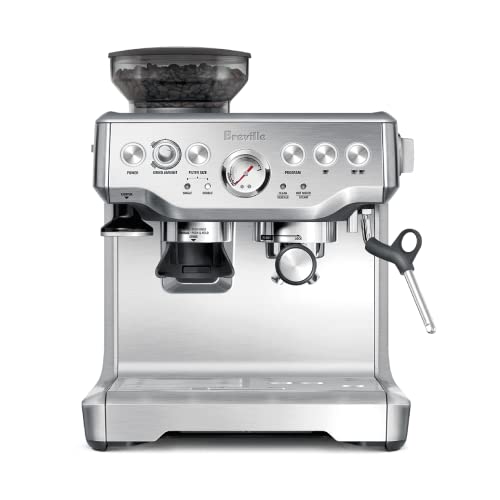
A well-known all-in-one that pairs a built-in conical burr grinder with a PID-controlled brew temperature and a low-pressure pre-infusion phase. For this specific problem, the combination matters: the grinder lets you make fine grind adjustments to move between sour and bitter, and the PID holds brew temperature steady so your results are repeatable rather than random.
Pros:
- Built-in burr grinder means grind size is adjustable in small steps — the key lever for fixing sour or bitter shots
- PID temperature control keeps brew water stable shot to shot
- Includes a pressure gauge so you can see what’s happening during extraction
Cons:
- Takes up meaningful counter space and has a learning curve
- The built-in grinder is good but not as adjustable as a dedicated high-end grinder
Breville BES870BTR Barista Express Espresso Machine, Black Truffle
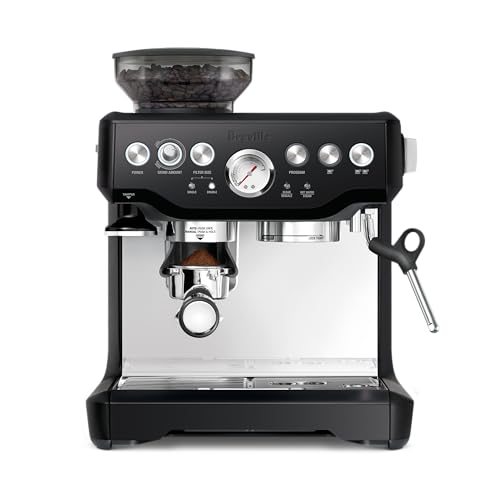
The same Barista Express platform as above, in a darker finish. Functionally it offers the same advantages for dialing in extraction: integrated burr grinding, PID brew temperature control, and pre-infusion for a gentler start to the shot. If the finish matters to your kitchen, this is the version to look at.
Pros:
- Same PID temperature control and adjustable burr grinder as the stainless model
- Pre-infusion helps reduce channeling, which is a common cause of sour-and-bitter-together shots
- Darker finish hides fingerprints and splatter well
Cons:
- Same counter-space footprint as the stainless version
- Same grinder limitations — good, not exceptional
Espresso Machine with Grinder and Frother, 30 Grind Settings, 20 Bar

A more budget-oriented all-in-one with a wide range of grind settings and a stated 20 bar pump. The 30 grind settings are the relevant feature here: fixing sour or bitter espresso is mostly about making small grind moves, and more settings give you more room to fine-tune. The frothing wand is a bonus if you drink milk drinks.
Pros:
- 30 grind settings give you finer control than a machine with a few preset steps
- Grinder and espresso machine in one unit saves counter space and cost
- Steam wand for milk drinks
Cons:
- A very high maximum pump pressure rating doesn’t guarantee consistent pressure at the puck — check owner experiences
- Budget all-in-ones often have less temperature stability than PID-equipped machines
CASABREWS CM5418 Compact Espresso Machine with Milk Frothing Steam Wand

A compact, straightforward espresso machine with a steam wand for frothing. It’s a reasonable entry point if you already own a separate grinder — which is actually the ideal setup for troubleshooting sour and bitter shots, since a dedicated grinder gives you the most control over the single variable that matters most.
Pros:
- Compact footprint, good for small kitchens
- Steam wand handles milk drinks
- Simple operation with fewer things to go wrong
Cons:
- No built-in grinder, so grind control depends on what you already own
- No PID temperature control, so brew temperature will be less consistent than the machines above
What to Look For
- PID temperature control. This is the single most useful feature for consistent espresso. It holds brew water at a set temperature instead of letting it swing.
- An adjustable burr grinder. Blade grinders produce uneven particles, which extract unevenly and give you sour and bitter in the same cup. Burrs give you repeatable, incremental adjustments.
- Realistic pressure, not just a big number. Many machines advertise 20 bar, but espresso is typically brewed around 9 bar at the puck. Look for a machine with a pressure gauge or over-pressure valve rather than the highest advertised figure.
- A scale-friendly workflow. You want to be able to weigh your dose and your yield. Any machine can do this — just make sure you have the scale.
- Parts and cleaning support. Descaler, backflush discs, and replacement gaskets should be easy to find.
- A size that fits your counter. Measure first. A machine you resent moving is a machine you’ll stop using.
FAQ
Is sour espresso or bitter espresso easier to fix?
Sour (under-extracted) espresso is usually the easier fix because you can grind finer and slow the shot down. Bitter (over-extracted) shots often need a coarser grind plus a temperature check, and if your machine brews too hot with no control, you may be limited in what you can do.
How long should an espresso shot take?
A common starting point is roughly 25 to 30 seconds from the moment the pump starts to when you stop the shot, for a double shot of about 36 to 40 grams of liquid. If yours finishes in 15 seconds it will likely taste sour; if it takes 45 seconds it will likely taste bitter. Treat these as a starting point, not a rule.
Does the coffee bean itself cause sour espresso?
Yes, sometimes. Very light roasts are naturally more acidic and can read as sour even when brewed well, while dark, oily roasts can taste bitter or ashy. If you have tuned grind and dose carefully and still dislike the cup, try a medium roast before assuming the machine is at fault.
What does a PID do on an espresso machine?
A PID controller holds the brew water at a target temperature within a narrow range instead of swinging up and down. Since water temperature strongly influences how much gets extracted from the coffee, a stable temperature makes your results more repeatable — you change one variable at a time and actually see the effect.
Can stale coffee make espresso taste bad?
Yes. Coffee that is many months past its roast date loses aromatics and tends to taste flat, papery, or harshly bitter. Buying beans with a visible roast date and using them within a few weeks of opening is one of the cheapest improvements you can make.
Do I need a scale to fix sour or bitter espresso?
A scale is one of the highest-value tools you can buy. Weighing your coffee dose and your liquid output turns vague adjustments into repeatable ones, so you can tell whether a change actually helped.